
Here I am, send me
It is good to be back in Vinnytsia, Ukraine.
It’s amazing how much I miss Kim, my kids, and my grandkids when I come here. It really does feel like part of me isn’t here.
I’ve only been back a couple of days, but things feel different than they did a few months ago. The war has escalated. Drone attacks have increased. Ballistic missiles continue to strike cities, and you can sense that people are tired.
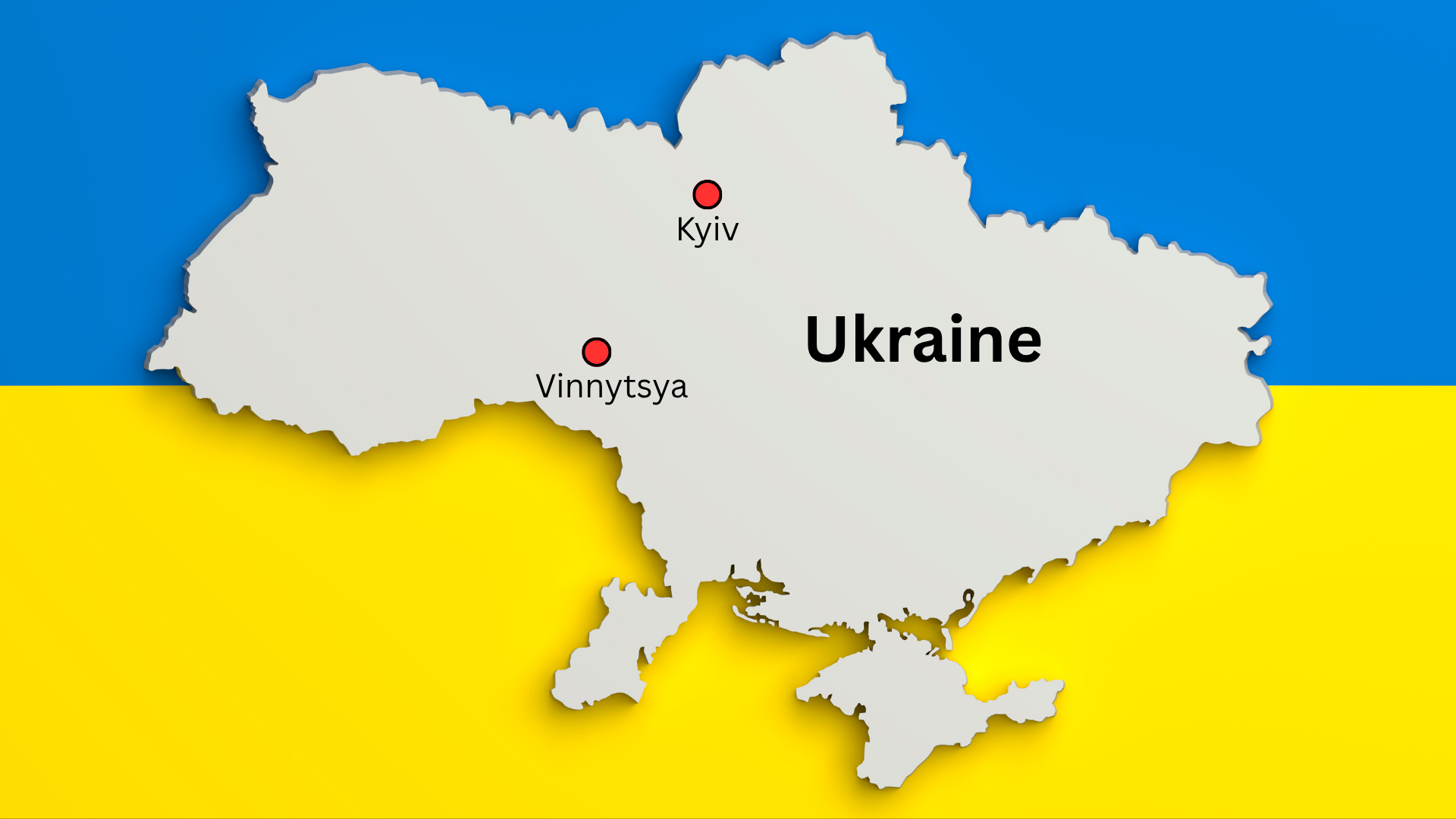
Vinnytsia, is our home base.
We are working with a church we helped start in 1994
Yesterday I was in a grocery store when a severe air alert came through. An announcement warned everyone about the danger and basically said that if you stayed, you stayed at your own risk—no one left. I went to take a video, but then found out that you cannot take pictures or videos in grocery stores because the Russians are targeting food warehouses and grocery stores.
And yet, life goes on “as if normal” is one of the strangest things about Ukraine. Life can look so normal. People go to work. Children walk down the street. Restaurants are open. People laugh, go to coffee shops, buy groceries.
Then the sirens sound. And life keeps going.
There is a perseverance here that is hard to describe. But underneath that strength is tremendous pain, stress, and loss.
We saw some of it in the hospitals this week. I love our MecyMed program.
We met again with the military general who oversees three university hospital clinics, along with leaders in medicine and rehabilitation. They are treating soldiers with terrible physical injuries, but some of the deepest wounds are the ones you cannot see.
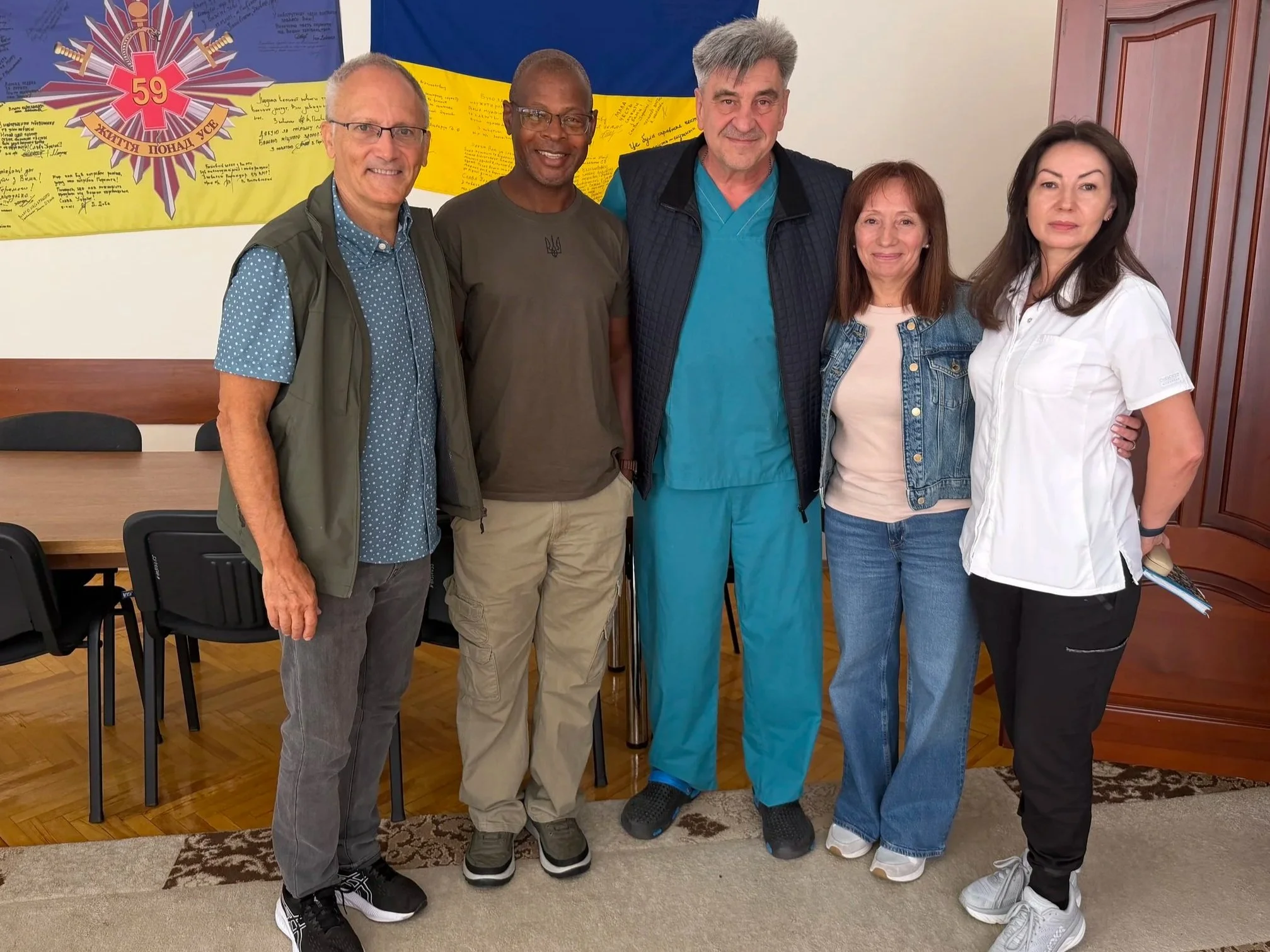
Meeting yesturday at the University Hospital
Trauma. Depression. Alcohol. Drugs. Broken relationships.
Their psychologists, medical staff, and rehabilitation unit teams are overwhelmed.
The need is desperate.
Then something amazing happened.
The military general who oversees these hospital clinics asked us for help. The soldiers have been severely traumatized and are struggling with drug addiction and alcoholism. It is extreme. Because the hospital staff and psychologists are so overrun, they asked if we could send soldiers to the Hope Center for spiritual renewal.
Currently, our plan is to bring soldiers to the Hope Center for periods of spiritual renewal. We are working on bringing pastors, chaplains, Christian psychologists, and massage therapists to minister the Holy Spirit to these wounded ones.
Praise God, or as they say in Ukraine, “SLAH-vah BOH-hoo”
I have always believed the church should be relevant to its community so that when a city is hurting, people know they can call the church. Not because we have all the answers.
But because, as believers, we mobilize for action.
Scripture says: “Do not be overcome by evil, but overcome evil with good.”— Romans 12:21
There is plenty of evil here. But we can still do good by being physically present in life's “hard times.”
We can sit beside a wounded soldier and homeless refugees. We can pray. We can listen. We can serve, and most importantly, we can bring them to Jesus.
As I thought about all of this, I kept coming back to Isaiah.
In the scripture, Isaiah sees the Lord high and lifted up. He becomes painfully aware of his own weakness and cries, “Woe is me.”God touches him. God cleanses him. And then Isaiah hears the heartbeat of our Father God:
“Whom shall I send? And who will go for us?”
Isaiah answers: “Here am I. Send me.” Isaiah 6:8
In Hebrew, “Here am I” is Hineni. In Hebrew, Hineni is more than telling God where you are. It actively makes you available to Him. It is saying:
I’m here.
I’m listening.
I’m Yours.
Notice God did not ask Isaiah, “Are you capable or anointed. He did not ask, “Are you strong enough or gifted enough?” He asked, “Who will go?”
I look at the needs of these soldiers and families and realize Harvest Equippers and the Church of the Risen Christ could never do all of this ourselves. That may be the point. God isn't looking for people who can fix everything. He is looking for people who will say:
Hineni. I’m here. What can I do?
There is also a beautiful connection to Jesus here.
John looks back at Isaiah's vision and says Isaiah “saw Jesus’ glory and spoke about Him” (John 12:41). Think about that. Isaiah saw His glory and said, “Send me.” Then centuries later, the One Isaiah saw came Himself.

He came.
Jesus didn't remain distant from our suffering. He came. He touched lepers, and He sat with broken people.
He entered grief. He carried our pain.
That is why “we” go, not simply because Ukraine needs humanitarian assistance. “We” go because Jesus came to us. I realize not everyone can come to these places, and yet, together, as we partner through your prayers and support, it is not just me; it is us answering the Lord's call. “Who will go for us?
Yesterday, hospital leaders were asking the church to help wounded soldiers. Our relationship with these hospitals has already opened the door to a partnership between Pirogov Medical University here in Vinnytsia and the University of Alabama at Birmingham.
We could never have planned all of this.
We just kept showing up. And God kept opening doors. Why? Because He cares, and in his divine sovereignty, he has chosen to work through us. God says,
“Whom shall I send? And who will go for us?”
Hineni.
Here am I.
Send me.
Please pray for Ukraine. Pray for these soldiers and their families. Pray for the doctors and medical teams. Pray for Pastor Frederick, the Church of the Risen Christ, and the Hope Center. Pray that, in all this pain, people encounter Jesus.
Let’s keep making a difference through Him who gives us strength.